Global demand arrives at local connections
The International Energy Agency’s April 2026 outlook puts global data center electricity consumption at about 485 TWh in 2025 and projects roughly 950 TWh in 2030. Those are an estimate and a projection, not a count of signed projects. The report also identifies tighter constraints in grid connections and equipment supply.
A global growth curve cannot answer whether one campus can open on schedule. Electricity has to be available at the connection serving that campus. For a project team, the important evidence is therefore a dated delivery plan, including the infrastructure on which it depends, rather than an undifferentiated headline in megawatts.
Keep power, energy and IT capacity separate
Megawatts describe a rate of electricity use or a capacity limit. Megawatt-hours describe energy over time. A constant 10 MW load running for 24 hours consumes 240 MWh. This is an arithmetic example, not a measured facility or a forecast of its utilisation.
The boundary matters too. Facility demand includes cooling and electrical overhead as well as IT equipment. Power usage effectiveness, or PUE, compares total facility energy with IT energy over the same period. In an illustrative period with PUE 1.25, 100 MWh at the facility boundary corresponds to 80 MWh at the IT boundary. That relationship does not establish how much useful work the IT performed.
A queue is not an operating hall
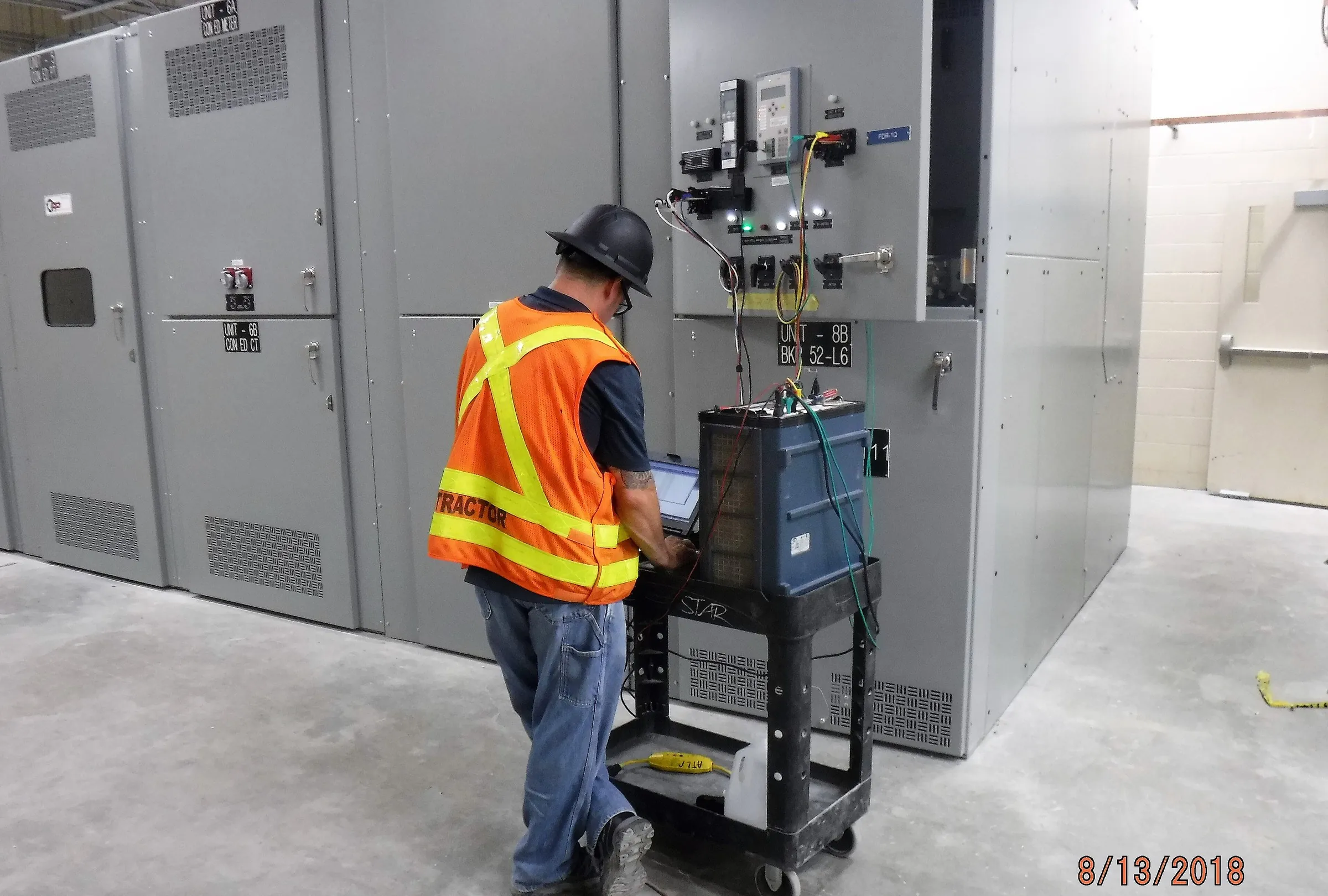
The IEA’s 2025 analysis explained why data center growth can be difficult to accommodate: projects are geographically concentrated, while new transmission and critical equipment take time. The point survives changes in individual forecasts. A connection request, a committed upgrade and an energised service are different pieces of evidence.
For a phased campus, ask what can run during each stage. Does the first hall depend on the final substation? Which equipment orders, tests or offsite works sit on the critical path? Present available capacity, future capacity and timing conditions separately so that readers can distinguish an operating asset from an ambition.
Flexibility must name the work it can move
Demand response can change when a data center draws electricity. Google described new utility agreements in August 2025 that extended its flexible-demand work to machine-learning workloads. That is evidence of an operator pursuing a particular approach, not proof that every service can pause without consequence.
A US Department of Energy advisory-board taxonomy makes the practical questions clearer: how much load can change, how quickly, with how much notice, and for how long? It also recognises that the facility operator and the company controlling the workload may be different organisations. A promise of flexibility has to connect those responsibilities.
GoogleUS Department of Energy Secretary of Energy Advisory Board
Read the whole operating promise
A useful power brief states the connection boundary, opening load, expansion stages, supply conditions and service requirements together. If batteries or onsite generation are proposed, ask which specific gap they address and for what duration. Storage can shift energy; it still needs to be charged. A generator still needs fuel, maintenance and permission to operate.
The strongest comparison is a documented operating scenario. What happens on the day a supply component is unavailable, the weather is hot and customers still expect service? That question connects the electrical design to cooling and computing. It is also why a delivery date, with its conditions attached, can be more informative than a larger megawatt headline.
US Department of Energy Secretary of Energy Advisory BoardInternational Energy Agency
Sources
- Key Questions on Energy and AI: executive summaryInternational Energy Agency · April 2026
- Power usage effectiveness and measurement boundariesGoogle Data Centers · Accessed 29 October 2026
- Energy and AI: executive summaryInternational Energy Agency · April 2025
- How we are making data centers more flexible to benefit power gridsGoogle · 4 August 2025
- Powering AI and Data Center Infrastructure RecommendationsUS Department of Energy Secretary of Energy Advisory Board · July 2024
Company sources describe their own work and terminology. Our editorial approach