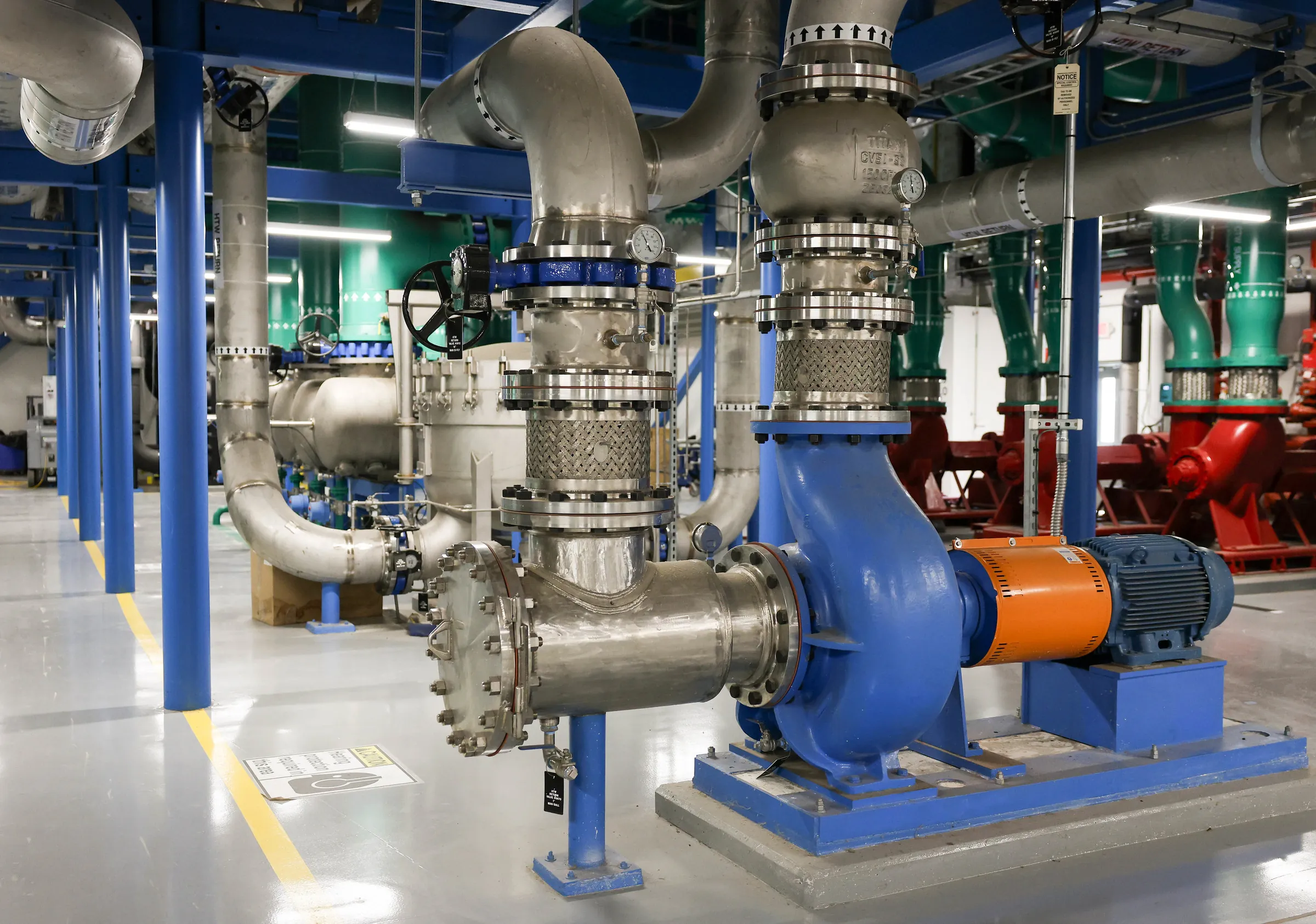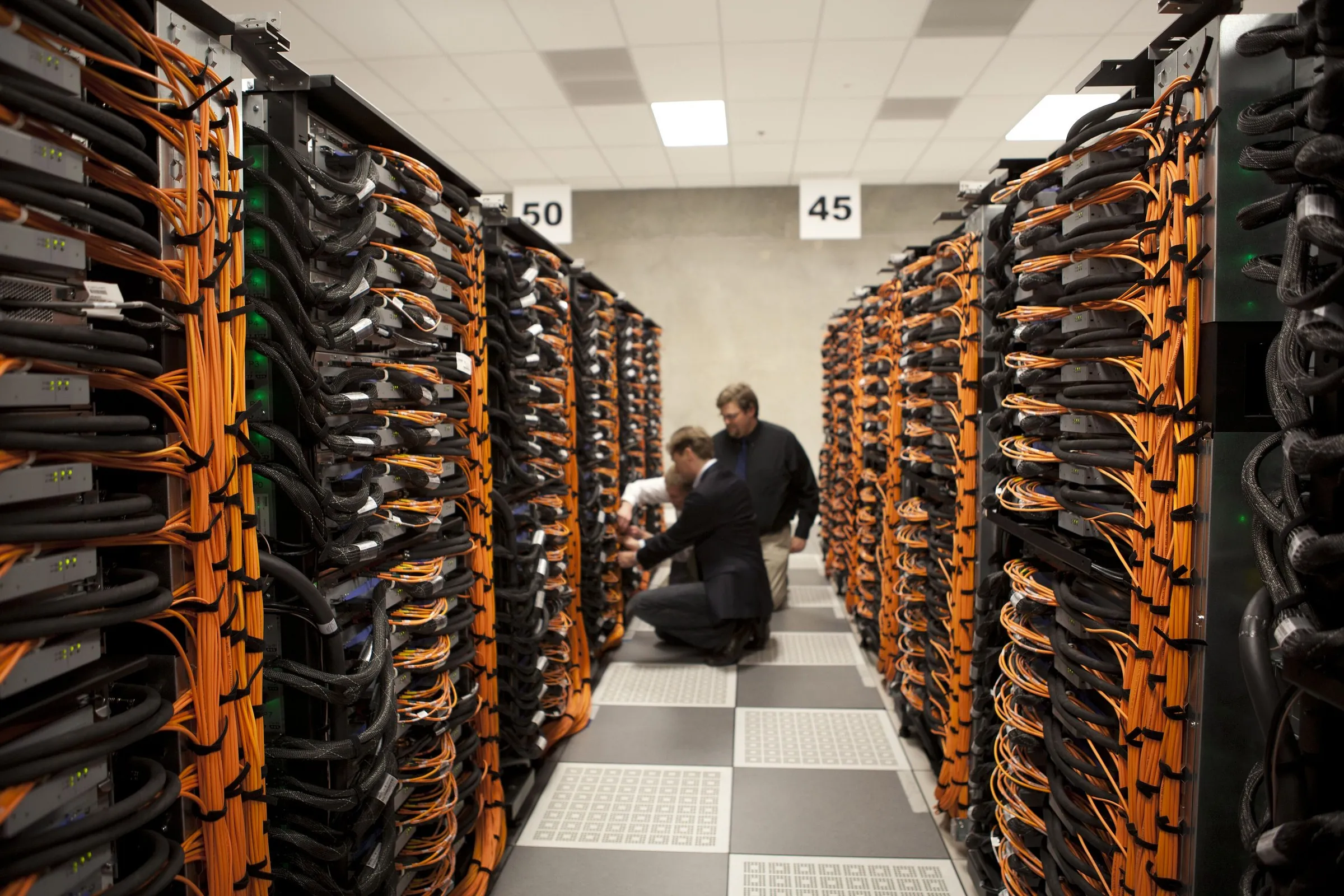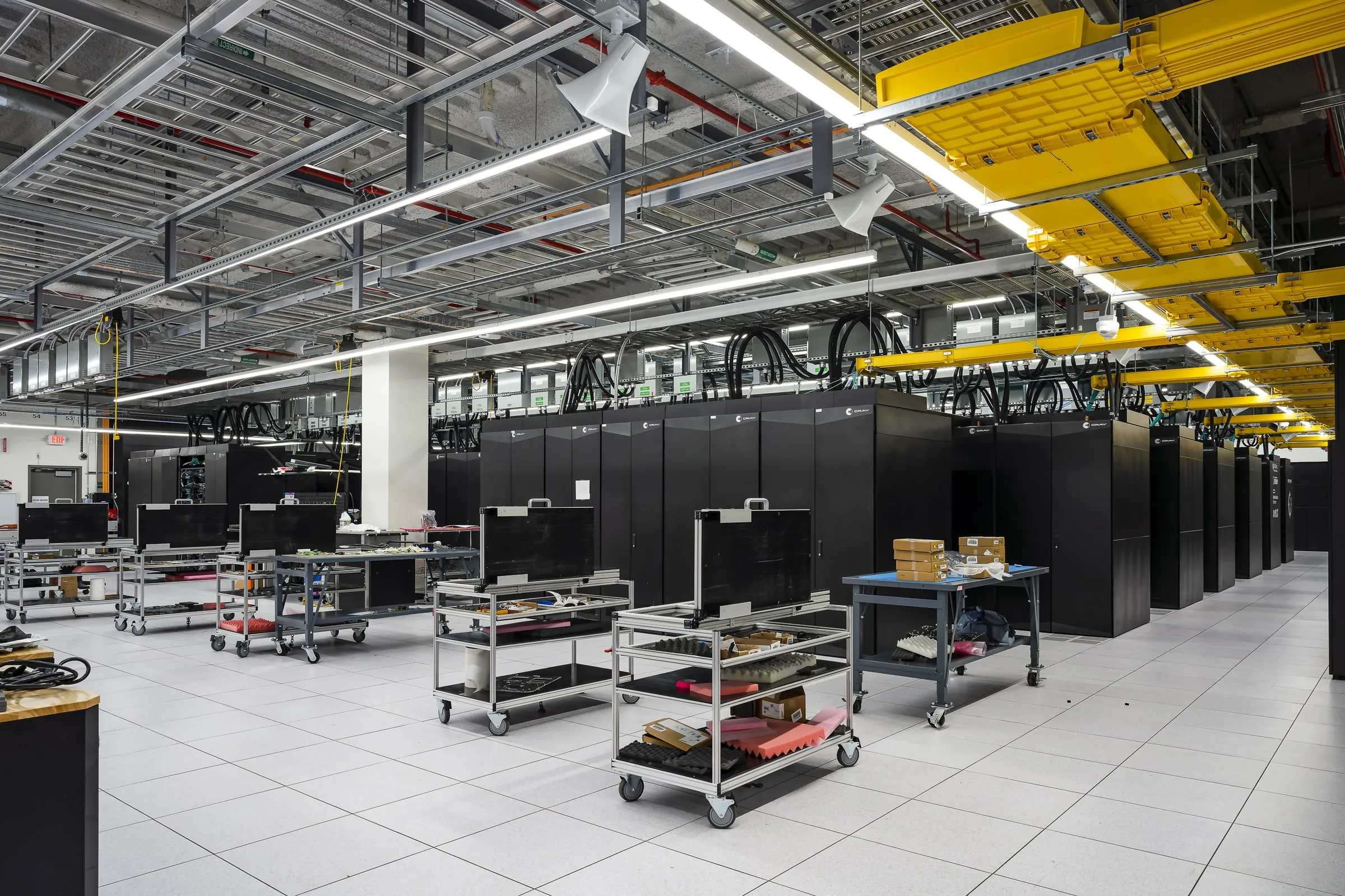
Built somewhere else
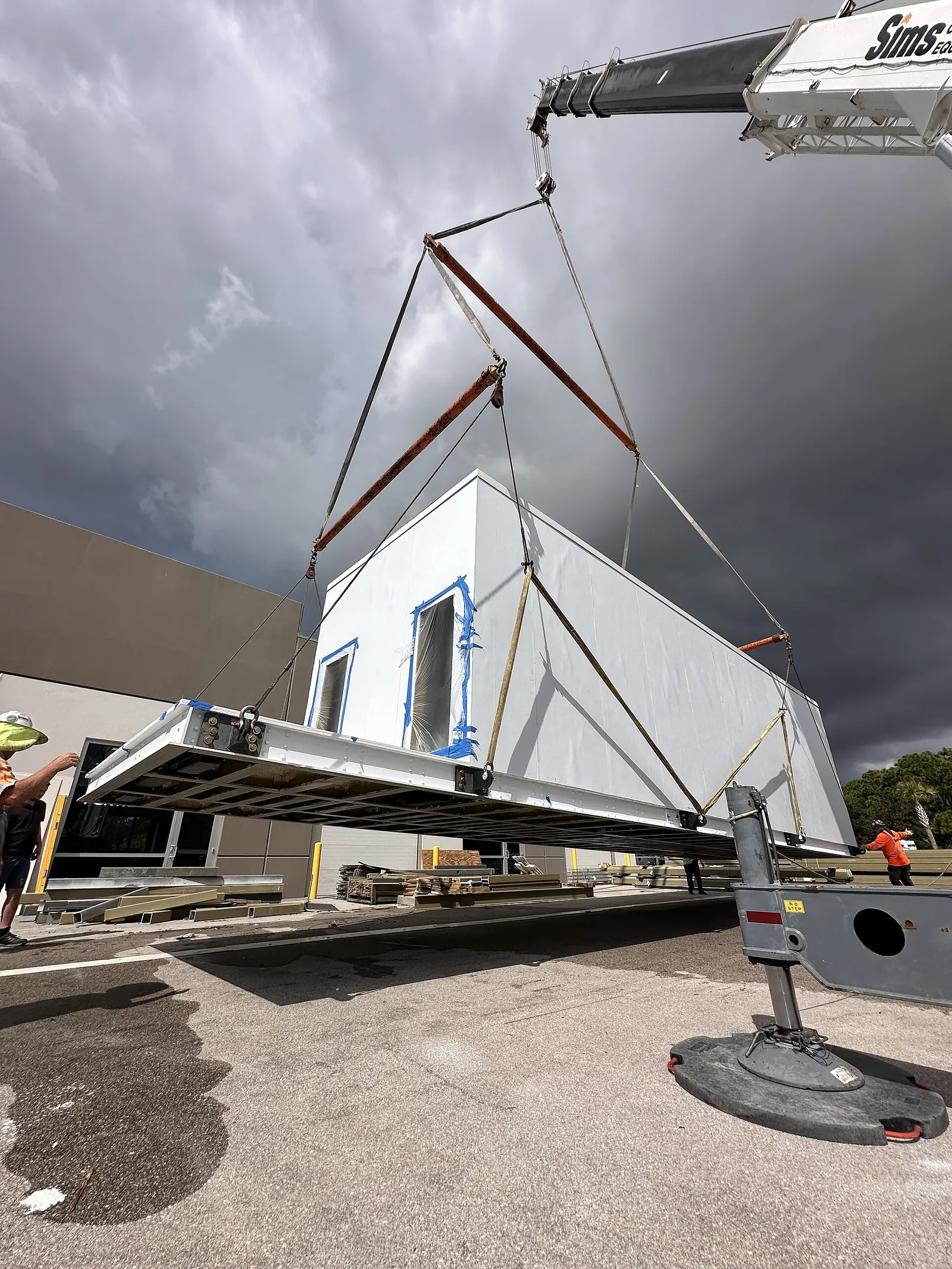
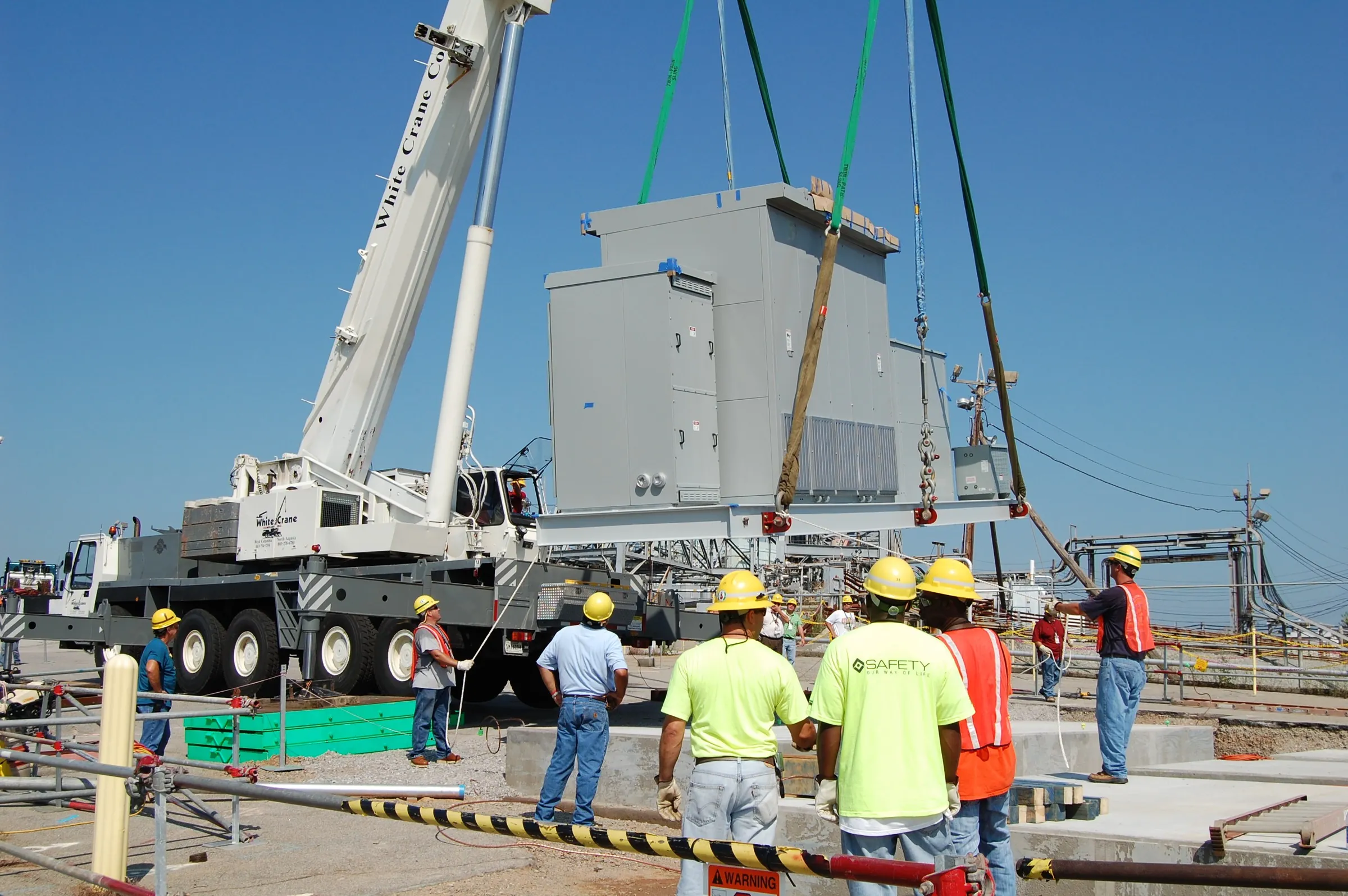
A finished module swings from a crane onto its foundations. Many of the decisions that shape it were made earlier, in the factory drawings: where the pipes, cables and access doors go.
Two ideas travel together here. Prefabrication moves assembly away from the final site. Modularity divides capacity into repeatable units. A factory-built electrical room, a cooling skid and a complete IT enclosure all belong to the family, and none of them has to be a shipping container.
What the factory changes
While a site team prepares foundations, another team can assemble equipment under a factory roof. Vertiv, which sells prefabricated modules, says that completing integration work in the factory helps maintain quality, and that factory assembly and testing make schedules and costs more predictable.
Schneider Electric and Compass Datacenters jointly engineered a prefabricated module for the server floor, which they call a pod, and have put numbers on one case. Their October 2026 time study of a high-density, liquid-cooled deployment at a Compass campus reports onsite installation falling from 75.5 hours to 15 hours per pod, an 80% reduction for the configuration studied.
That is a measurement by the companies that developed and deployed the pod, for one design, and it counts installation hours for the pods. It does not cover land, utility connections or the schedule of a whole campus.
Proven on site
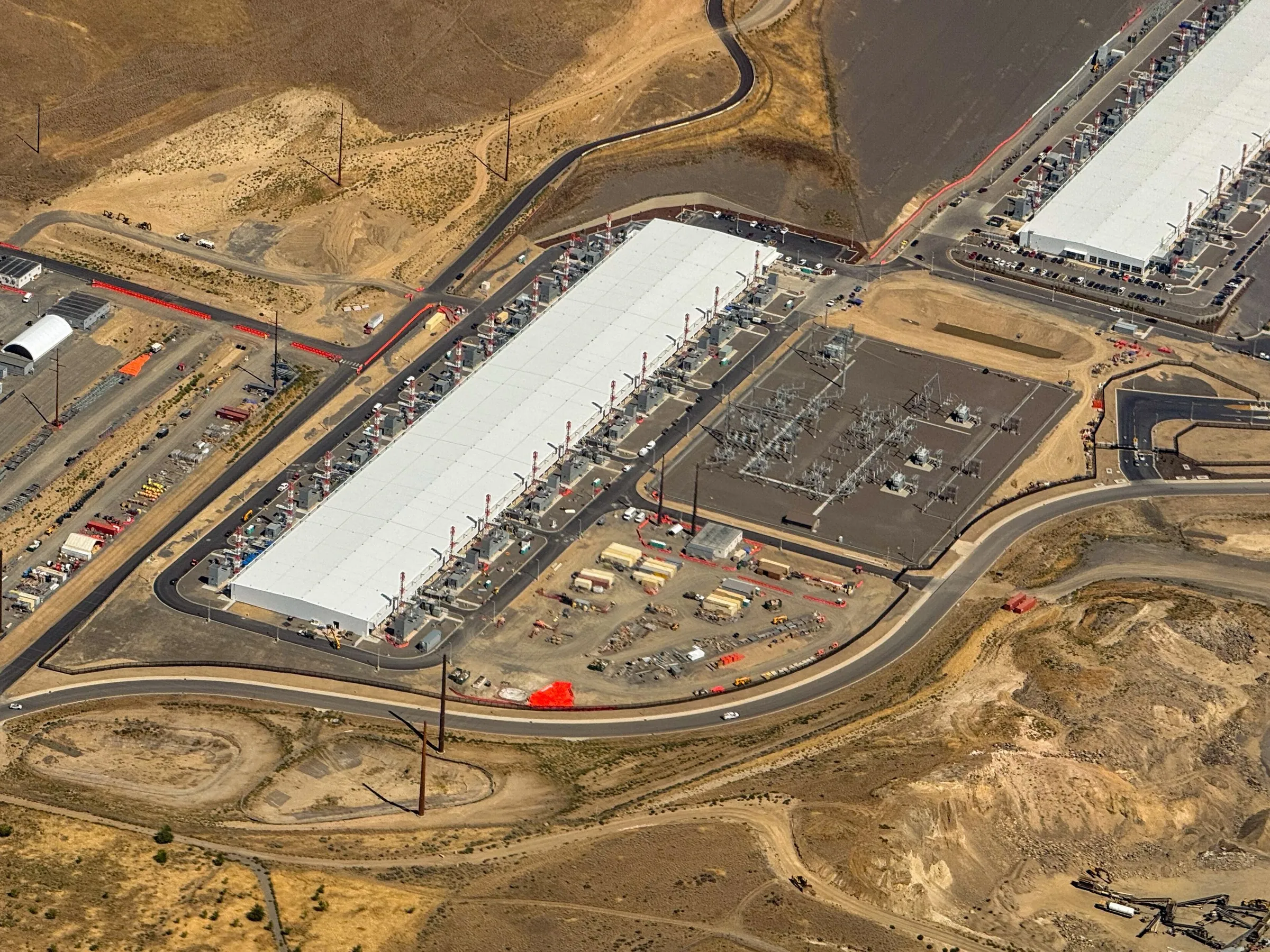
A module still needs ground to stand on and systems to connect to. Its condition on delivery, its external connections and its performance once assembled are all site work. The factory can reduce the tasks left for the site, but it cannot test interactions with equipment that was never in the factory.
The AI Data Center Energy Performance Framework from ASHRAE, NEMA and PNNL describes a conventional five-level sequence, from factory acceptance testing to integrated systems testing of the finished facility. Factory acceptance is L1 in that sequence. Delivery, installation, site interfaces and the completed facility still need verification on site, with the team that will run the building; the detailed test sequence depends on the project.
Visual guide
What the factory can test, and what only the site can
Choose a step, or select a part of the diagram.
- In the factory. Under a factory roof, equipment is assembled and integrated, then undergoes factory acceptance testing, commissioning level 1 in the traditional sequence shown.
- Meanwhile, on site. At the same time, the site prepares utility connections and foundations. The schematic shows the order of work, not durations.
- The tracks meet. The module travels to the site by truck. It is lifted onto its foundations and its pipes and cables are joined to the site’s.
- Four levels on site. In the traditional sequence shown, four more levels follow on site. Level 2 verifies delivery and installation, level 3 runs pre-functional checks, level 4 tests each system and level 5 tests all the systems together.
- With the team. Levels 4 and 5 involve the team that will run the building. Integrated systems testing at level 5 covers the finished facility.
Sources
- Prefabricated Modular Data Centers: From Disruption to Default OptionVertiv · 2019
- Prefabricated White Space Module Time Study: Lessons from a High-Density Liquid-Cooled DeploymentSchneider Electric with Compass Datacenters · 16 October 2026
- AI Data Center Energy Performance Framework: Commissioning & Performance ValidationASHRAE, NEMA and PNNL · June 2026
Company sources describe their own work and terminology. Our editorial approach